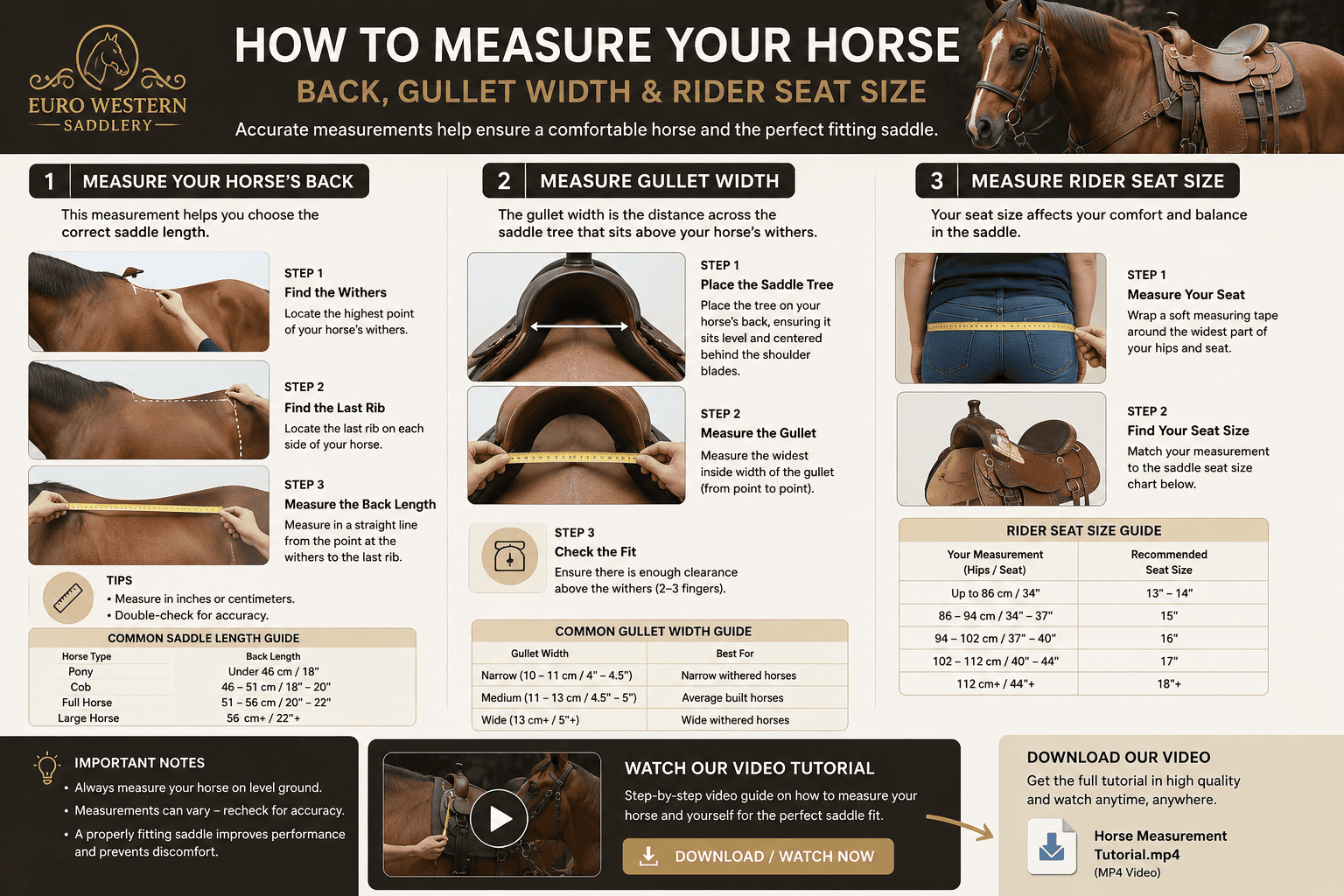
Ultimate Saddle Sizing & Fitting Guide
How to Measure Your Horse’s Back, Gullet Width & Rider Seat Size
Choosing the correct saddle size is one of the most important investments you can make for your horse’s comfort and your riding performance. Whether you’re shopping for a Western saddle, English saddle, trail saddle, barrel saddle, or used saddle, accurate measurements ensure the best possible fit.
At Euro Western Saddlery, we have over 10 years of experience helping riders across Europe find premium saddles that fit both horse and rider. This comprehensive saddle sizing guide explains everything you need to know before purchasing your next saddle.
Why Proper Saddle Fit Is So Important
A poorly fitting saddle can cause:
Back pain and soreness
Pressure points
White hairs from pressure
Muscle atrophy
Reduced shoulder movement
Poor riding performance
Behavioural issues
Uneven rider balance
A properly fitted saddle allows your horse to move freely while providing maximum comfort for both horse and rider.
Tools You’ll Need
Before measuring your horse, prepare the following:
✔ Flexible measuring tape
✔ Flexible curve ruler (Flexi Curve)
✔ Wire coat hanger or bendable wire (alternative)
✔ Marker or chalk
✔ Notebook
✔ Smartphone or camera
✔ Spirit level (optional)
✔ A helper (recommended)
Always measure your horse while standing square on flat, level ground.
STEP 1 – Measure Your Horse’s Back Length
Why This Measurement Matters
Your saddle must sit only on the horse’s weight-bearing area.
If the saddle extends beyond the last rib, excessive pressure may be placed on the lumbar region.
How To Measure
Step 1
Locate the back edge of your horse’s shoulder blade (scapula).
Step 2
Locate the last rib.
If you cannot easily feel it, gently follow the rib cage backwards.
Step 3
Using a flexible tape measure, measure from:
Rear of Shoulder Blade → Last Rib
Record this measurement.
This is your horse’s usable saddle-bearing surface.
Pro Tip
A short-backed horse usually requires a shorter saddle skirt or compact saddle tree.
STEP 2 – Measure Your Horse’s Wither Shape
Why This Matters
The withers determine which tree width will fit your horse.
How To Measure
Stand approximately 2–3 inches (5–8 cm) behind the rear edge of the shoulder blade.
Place a flexible curve over the horse’s back.
Allow it to naturally follow the horse’s shape.
Do not push downward.
Remove carefully.
Transfer the exact shape onto paper.
Label the tracing.
This tracing becomes your saddle fitting template.
STEP 3 – Measure Gullet Width
Why Gullet Width Matters
The gullet provides clearance for:
Spine
Ligaments
Withers
Soft tissue
A gullet that is too narrow causes pinching.
Too wide may cause instability and poor balance.
Typical Tree Width Guide
| Tree Width | Horse Type |
|---|---|
| Narrow | High withers, Thoroughbreds |
| Medium | Average horses |
| Medium Wide | Quarter Horses |
| Wide | Broad horses |
| Extra Wide | Draft crosses, very broad horses |
Always compare your measurements with the manufacturer’s saddle sizing chart, as sizing varies by brand.
STEP 4 – Check Wither Clearance
Place the saddle directly on your horse’s back without a saddle pad.
Look for:
✔ 2–4 fingers of clearance above the withers before mounting
✔ Adequate space along the spine
✔ No contact with the spinal column
Once mounted, the clearance will naturally decrease slightly while still maintaining appropriate space.
STEP 5 – Check Saddle Panel Contact
Slide your hand beneath the saddle.
Pressure should feel even from front to back.
Avoid:
❌ Tight pressure points
❌ Bridging
❌ Rocking
❌ Large gaps
Even contact allows weight to be distributed comfortably.
STEP 6 – Check Saddle Balance
Stand beside your horse.
The saddle should appear level.
The:
Pommel should not sit excessively high.
Cantle should not drop backwards.
Seat should remain balanced.
An unbalanced saddle shifts the rider’s weight and affects your horse’s movement.
STEP 7 – Measure Rider Seat Size
A correctly fitted rider is equally important.
Western Saddle Measurement
Measure:
Base of Horn → Center of Cantle
This measurement determines the saddle seat size.
General Western Saddle Seat Guide
| Rider Build | Recommended Seat Size |
|---|---|
| Youth | 10″–12″ |
| Petite Adult | 13″ |
| Average Adult | 14″–15″ |
| Larger Adult | 16″ |
| Tall or Larger Rider | 17″–18″ |
Choose a seat that allows approximately 4 inches (10 cm) of space between your body and the base of the horn when seated naturally.
STEP 8 – Check Shoulder Movement
Walk your horse while the saddle is positioned correctly.
Observe:
✔ Shoulder freedom
✔ Natural stride
✔ Saddle stability
✔ Even movement
The saddle should not interfere with the horse’s shoulder rotation.
STEP 9 – Perform a Riding Test
Ride your horse at:
Walk
Trot
Canter (if appropriate)
After riding:
Remove the saddle.
Inspect for:
✔ Even sweat marks
✔ Smooth hair
✔ No dry pressure spots
✔ No swelling
✔ No sensitivity
Uneven sweat patterns may indicate pressure imbalances that require further assessment.
Common Saddle Fitting Mistakes
Many riders accidentally make these errors:
❌ Buying based only on appearance
❌ Guessing tree width
❌ Choosing the same saddle size for every horse
❌ Using extra pads to fix poor fit
❌ Ignoring back length
❌ Measuring only the rider
❌ Forgetting to remeasure as the horse’s condition changes
How Often Should You Measure Your Horse?
Experts recommend measuring your horse:
Every 6–12 months
After significant weight changes
Following muscle development
After extended periods off work
When changing disciplines
Before purchasing any new saddle
Even minor changes in condition can affect saddle fit.
Signs Your Saddle Fits Correctly
A properly fitted saddle should:
✔ Sit level on the horse’s back
✔ Provide even weight distribution
✔ Maintain appropriate wither clearance
✔ Allow unrestricted shoulder movement
✔ Stay stable without excessive movement
✔ Keep the rider balanced and centered
✔ Leave even sweat patterns after riding
Signs Your Saddle Does Not Fit
Watch for these warning signs:
Bucking during saddling
Ear pinning
Tail swishing
White hairs developing
Uneven sweat marks
Difficulty bending
Shortened stride
Back soreness
Saddle slipping
Rider instability
If you notice these issues, reassess the saddle fit or consult a qualified saddle fitter.
Why Buy from Euro Western Saddlery?
With over 10 years of experience, Euro Western Saddlery is a trusted destination for riders across Europe seeking premium saddles and equestrian equipment. We carefully source high-quality products to help horse owners achieve the perfect fit and enhance every ride.
When you shop with us, you’ll benefit from:
Premium Western Saddles
English Saddles
Used Saddles
Kids’ Saddles
Saddle Pads
Expert saddle sizing advice
Competitive prices
Fast delivery across Europe
Secure online shopping
Friendly customer support
Whether you’re a trail rider, ranch rider, dressage enthusiast, show jumper, endurance competitor, or leisure rider, our knowledgeable team is here to help you find the ideal saddle for both you and your horse.
Frequently Asked Questions
Can one saddle fit multiple horses?
Some adjustable saddles may suit horses with similar conformations, but because every horse has a unique back shape, it’s best to measure each horse individually before sharing a saddle.
How much wither clearance should a saddle have?
Before mounting, aim for approximately 2–4 fingers of clearance above the withers. Once mounted, some reduction is normal, but the saddle should continue to clear the withers and avoid pressure on the spine.
Should I use a saddle pad when checking fit?
Begin by checking saddle fit without a pad to evaluate the saddle itself. Once you’re satisfied with the fit, repeat the assessment using your regular saddle pad.
Do horses change shape over time?
Yes. Age, fitness, seasonal weight changes, muscle development, and workload can all alter your horse’s back shape, making regular saddle fit assessments important.
Find Your Perfect Saddle at Euro Western Saddlery
Choosing the right saddle starts with accurate measurements. By following this guide, you’ll be better equipped to select a saddle that supports your horse’s comfort, improves your riding position, and enhances performance.
Explore the extensive collection at Euro Western Saddlery, featuring premium Western Saddles, English Saddles, Used Saddles, Kids’ Saddles, and Saddle Pads. With expert guidance, trusted brands, and reliable delivery across Europe, we make it easier to find the perfect saddle for every horse and rider.